


What is Pre-Emergent Weed Control and Why Should You Use it?
With spring rapidly approaching in the Lowcountry (for some of us it may be here already) it is time to begin our yearly battle with the various weeds and undesirable plants that plague our yard. One of the solutions you may have heard of is the use of pre-emergent weed control, but what is that really? To put it simply, pre-emergent weed control is herbicides that kill the plant before it even has the chance to fully sprout. It prevents most weeds from even growing while keeping existing plants healthy and strong. There are also different types to choose from. Non-selective products don’t care about what seed is in the ground, they prevent anything new from growing. Selective herbicides, on the other hand, target specific types of plants. These selective pre-emergents usually either target grasses like crabgrass or goosegrass, or they target broadleaf plants such as clover or dandelions.
Unlike other types of weed killing products, pre-emergent weed control requires good timing to work effectively. As the name suggests, it needs to be in the soil of your yard before the seeds begin to sprout from the earth. The herbicides also break down after several weeks (anywhere from a couple of weeks to a couple of months depending on the climate), so, unfortunately, you can’t just put it down and hope. The best time to do this is mid to late March for the Lowcountry or when the soil temperature is around 55 degrees Fahrenheit if you want to get technical. Late September and Early October are also good times to apply as they can kill winter weeds like Carolina geranium and bittercress before their seeds take root.
How do I use it?
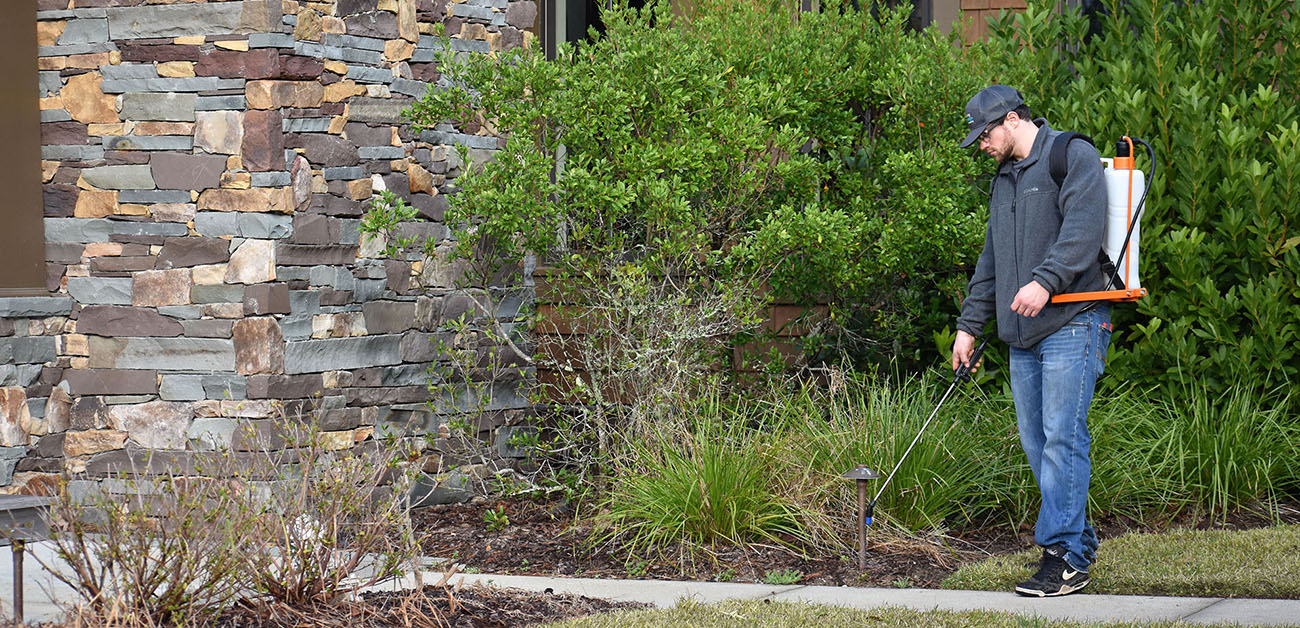
Pre-emergent weed control can be spread in two ways: as a spray, or in granules. Sprays use special canisters with nozzles that create a fan of herbicide when used to give the best coverage. Granules use spreaders (either hand-cranked or pushed) that distribute them evenly throughout your yard. The granules should also be watered into the soil after you finish spreading them. No matter which way you get your herbicides into the soil, it is very important that you take care to cover everything evenly. Missing a spot means that there is still an area for weeds to grow, which means more work for you and it gives the weeds a chance to reseed if you don’t catch them in time. You should also avoid adding or moving around soil once it is placed because that could create spots that the herbicide is not covering. The most crucial and helpful advice that we can give is to carefully read the label on the pre-emergent weed control product you are looking at, as it will tell you what type of herbicide it is, what it targets, and any safety warnings it might have.
Some Extra Tips
- The year after you use pre-emergent weed control you will see much fewer weeds in your yard. However, you should still reapply the herbicides to keep the weed population down, as some seeds can spread miles from their original flower, introducing the plants to your yard again.
- Be careful that the pre-emergent weed control you use does not harm the type of grass in your yard as some types of herbicides can target the seeds your grass produces. This information is often on the label of the product.
- Similarly, don’t put pre-emergent herbicides on newly planted sod or recently reseeded lawns.
Using pre-emergent weed control can be tricky, but it is a worthwhile investment if you find yourself constantly battling unwanted plants in your yard. Doing it right saves you hours pulling weeds by hand or using more powerful herbicides that also risk killing your other plants and grasses. If you are worried about doing it wrong or if you just don’t have the time, you can always contact us, and we will take care of everything for you.


