


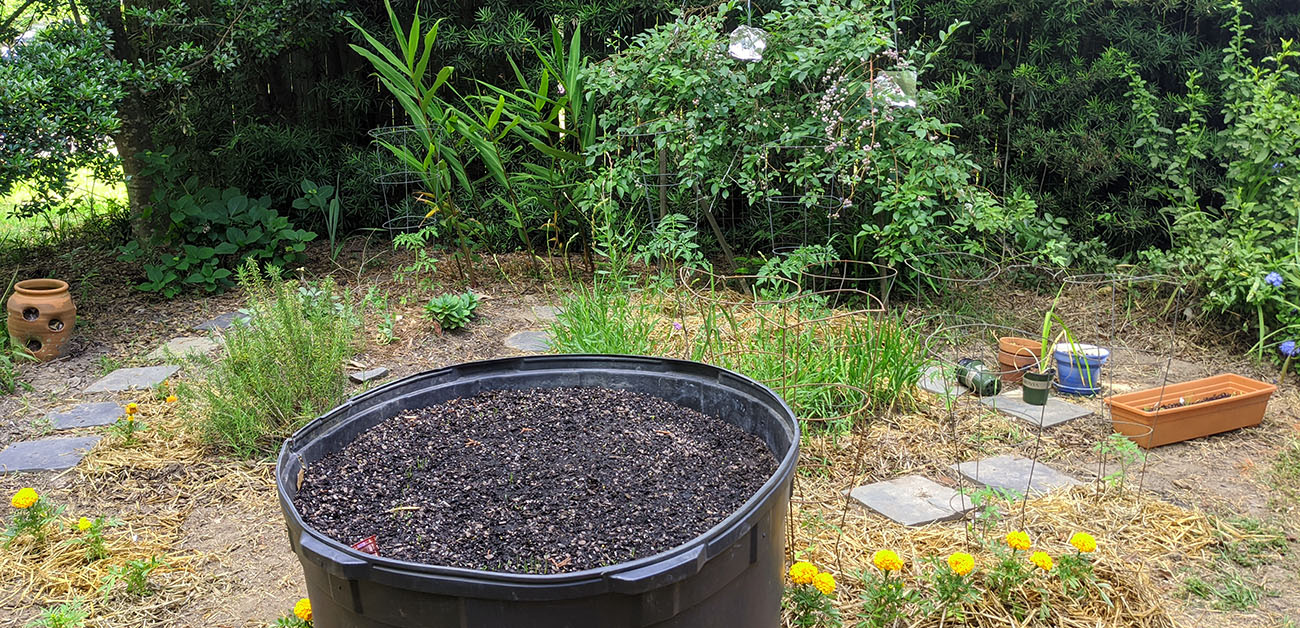
We Turned Our Front Yard Into a Garden!
While stuck at home our family has been trying to say productive, and what better way to be productive than produce? It’s in the name! My sister, who returned home from college shortly after last month’s blog post, brought her window box of plants with her, and after her success, we turned to the outdoors to truly test our mettle. We already had an old garden plot from years earlier, but it had sat unused for some time. But we had larger goals. We wanted to turn the majority of our yard into a growing area. We didn’t have much to start with, all that was left was an old blueberry bush, a couple of herbs, some rusty tomato cages, and a whole boatload of weeds and anthills. This is where we started the yard’s transformation into a functioning garden.
We began by removing the weeds and old plant beds that were too overgrown to salvage. We managed to save some oregano and rosemary by transplanting them into small pots, but other than that there was not much we could keep. Having finished weeding, we treated the many anthills in the yard so they wouldn’t become a problem. Before moving on, we trimmed back some of the bushes that line our property to allow for more sunlight to reach the soon to be refurbished garden. Once that was finished, we began to prepare to expand the existing bed into a much larger one with multiple sections for different types of plants.
At the same time as our preparation to expand, we created seed starters, which are tiny containers full of soil that can hold a few seeds each. To do this we took empty toilet paper rolls and cut them in half. After that we put them all in a tray and filled them with soil, labeling them and planting seeds as we went. Seed starters make it easy to know what is growing and what isn’t because you can watch them day by day without walking around your yard or bending down to read a plant marker. It is also simple to water and move them! And when the seedlings are big enough to put into the ground, it takes no time at all to peel away the paper around them and stick them into the earth.
After both of those projects were done we could move on to the expansion of the garden. First, we marked up the area on our lawn that we wanted to dig up, leaving paths for us to walk through and marking areas where nothing would be planted. Then we tilled up the grass, raked all of the debris out, and further cultivated the soil by breaking up the harder bits of earth with shovels. This step was tough because it took quite a while to finish, though our yard has a lot of clay in the soil naturally. Once that was done, we created a better environment for our plants to grow by adding potting soil and fertilizer to mix into the existing dirt we had just tilled.
During the process of creating a larger growing area, the already prepared garden space was filled with the seedlings from the seed starters along with a couple of the healthy-sized plants from my sister’s window box that had outgrown their container. We also put straw down to help the soil retain water longer. Once the other areas of the garden were completed, we planted beans, peppers, squash, cucumbers, melons, and anything else that we had on hand. Next to each patch, we planted marigolds to help keep harmful insects away, and we added tinsel made of aluminum foil to the blueberry bush to stop birds from eating all of its fruit.
Even with all of this, we still have work to do. Potato starters came in the mail yesterday, and we are making a strawberry growing wall that will keep the strawberries safe from some types of critters. We also have large tubs of dirt that we plan to grow tubers and bulb plants like carrots, onions, parsnips, and the previously mentioned potatoes. Keeping These above ground in a controlled soil environment will make it easier to harvest them, as we won’t have to bend over as much and all the soil is soft and loamy making for quicker digging. We are excited to continue making our garden top-notch, even if it is small, and look forward to continuing the journey with you.


