


Winter Flowers: How to Keep Your Yard in Bloom All Year Long
Though it never gets too chilly here in the Lowcountry, there are usually a couple of weeks of low temperatures that make plants go into “winter mode.” It is not a big deal, but for those of us who like to keep our yards looking as vibrant as possible all year round, we crave to find things to fill in the bald spots of our plant life. In an earlier article we covered what evergreens you can use to help keep the greenery intact. This month, we are going into detail about plants that bloom in the winter months that will add some much-needed pops of color here and there.
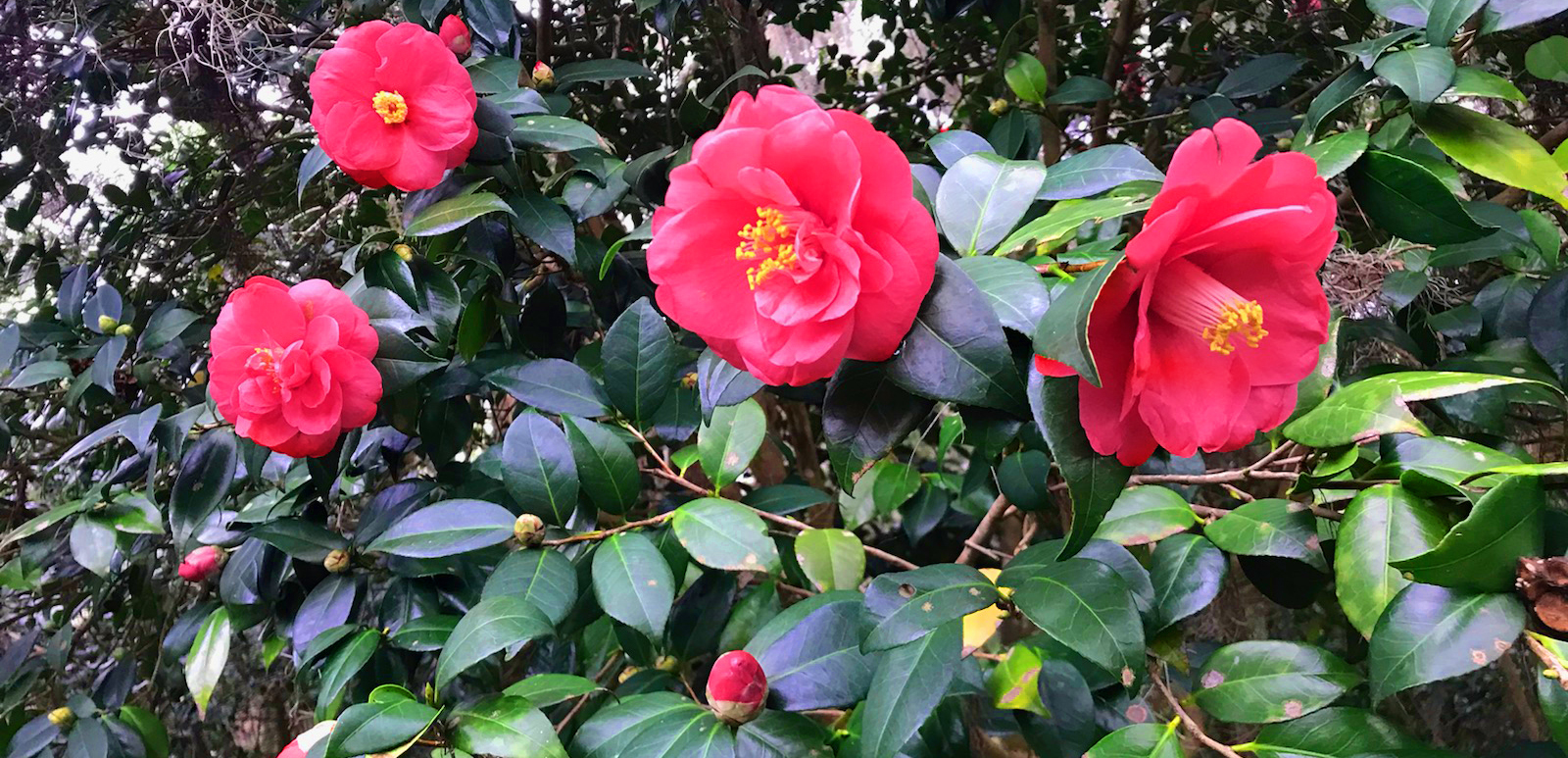
We will start with a favorite of mine: the camellia. This plant likes partial shade and blooms in the late winter, which is great for us since our winters are exceptionally short! It is evergreen too, so you don’t have to worry about it withering at any point. It will need some space to grow as it can get up to 8 feet on average, which is somewhat large for a shrub. But the size commitment is worth it, as it grows many vibrant blooms. When the flowers open, they are generally some shade of pink, though red and white variations also exist. Two varieties that grow here are the camellia japonica and the camellia sasanqua. As you may have guessed by the first variety’s name, the plants are native to China and Japan and were introduced to the US at the end of the 18th century.
Next up is the holly tree, or ilex aquifolium if you are feeling fancy. Originally from Europe, the tree is almost synonymous with winter, and for good reason. The flower it produces is humble. Small and mostly white, you may not even see them before they make way before the attention-grabbing red berries appear. Holly trees can reach up to thirty feet high and look beautiful once they are fully mature. We even have one in our own yard!
Going back to plants originating from the East, we have nandina domestica. It can be found all over Asia and has been used as a decorational plant for thousands of years! Nandina is a two-foot-high shrub that has sprigs of white flowers that turn into red berries after blooming. While the flowers bloom in spring, the berries can last a long time, often well into the winter! But that isn’t the only appeal of the nandina. For this plant, being called an evergreen could confuse some people, because some varieties change color when frost sets in! The leaves begin to turn a deep red, which lasts as long as the cold does.
The fourth plant on the list is called winter daphne, another plant that Americans brought over from Asia. It is well known for its aroma and durability in cold weather. Winter daphnes smell so pleasant that the second half of its Latin name, daphne odora, translates into “fragrant” (the first half is named after a nymph in Greek mythology and can also translate into laurel). The plant produces clumps of delicate pink flowers in early Spring, so it is a great plant to have to usher in the new season with color. And since it does not lose its leaves in winter you can view its lustrous leaves all year round! This is the plant for you if you like scented plants and soft-colored blooms.
Lastly, we have the lenten rose, a lovely perennial that comes in shades of pinks and purples. Lenten roses bloom late in the winter and throughout early spring. Though they are called roses, they are actually in the buttercup family. These plants are great for filling in small blank spaces, as they only reach a maximum size of two feet tall. If you want to fill large areas, lenten roses can also be used for groundcover. Just make sure that they stay in partial shade!


