


6 Steps to Creating Your Own Pollinator Garden
Have you ever wanted to see more bees in your garden? What about butterflies? All they need is the right environment, and they will flock to your yard! Animals love to visit places with a good source of food, whether they are bugs, birds, or elephants. While I cannot give any advice on how to lure an elephant to your backyard, I can provide some things that will invite pollinating bugs of all kinds. By following the 6 steps below, your garden will turn into a hotspot for bees, butterflies, and maybe even hummingbirds.
1. Diversify Flower Types
Planting a variety of different flower types in your yard is important to getting more pollinating insects to your garden. Like people, they enjoy having options. Include flowers with different shapes and sizes to have the greatest chance of pollinators deciding that your yard is the right yard for them. Also, having at least one variety of single-flower plants is important. Their large size provides a place to rest when bees stop to pollinate the flower. Shasta daisies, yarrow, sage, and guara (also commonly called "beeblossom") is one plant selection you can try.
2. Ensure that Bloom Times Overlap
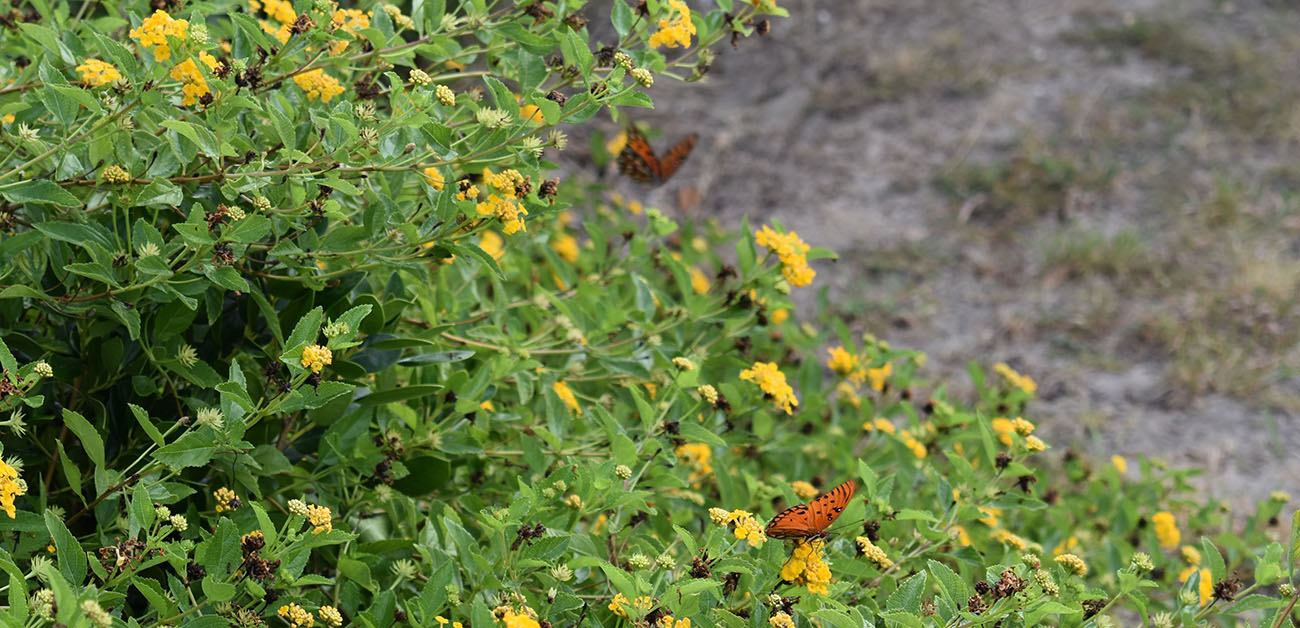
Make certain that the times of the year your plants are flowering overlap. By doing this you will give bees and butterflies a more consistent place to eat as well as making them more likely to hang around your garden! You can plant guara that blooms in Spring, lantana for the summer months, and Mexican sage to cap off the end of the year in Fall. Since most bee species hibernate in Winter, it is less important to worry about. Keeping an overlap throughout the year can be tricky, but there are ways to bridge the gaps. One way to do this is to plant a type of flower that can be deadheaded (removing the dying flower after it is finished blooming but leaving the stem), which keeps the plant blooming longer. Most annuals can be deadheaded without concern, but you should look it up if you are not sure. You can also buy bulbs, trees, or shrubs to fill in any other flowerless gaps. Once everything is set up, you will see flowers no matter the season.
3. Use a Mixture of Native and Exotic Plants
To bees, there is no difference whether you plant native or exotic plants. They will visit both as long as it has nectar and pollen. But there is a definite positive to combining the types in your pollinator garden: cross-pollination. Cross-pollination allows for more diverse plants to be created as the pollen is spread between the different species. This in turn makes the plants healthier overall. If you only plant native plants they will only have access to a limited pool of genes to exchange. So by using exotic plants, you give your garden more genes to work with, which further improves their health.
4. Plant in Patches
Carrying pollen from one place to another takes work, so why not make it easier on your pollinators? Every time a bee approaches a flower, it must land a certain way. With many types of flowers, it must spend valuable time flying while it figures each one out. If this happens too often, the bee may choose a place that has the same type of plants you do, but with a more convenient layout. You can make sure you have a good layout by planting things in groups. Keeping flowers of the same type in bunches helps bees work efficiently, which makes it likely that they will return.
5. Make Nesting Sites for Your Bees
Did you know that most bees live in the ground and not in a hive? This means that they can make a nest anywhere, but they still have preferences. Without much effort, you can create a great spot for them to live. To start, leave an area of your garden blank, and hardpack the dirt. This keeps the dirt sturdy when burrowed into so the nest does not collapse. Then cover the area in rocks of various sizes (paving stones work too) to give them shade. After that, you are done! Just make sure to put the nesting site in an area that is not frequently walked on. Stepping on a nest could destroy it and anger the bees inside.
6. Be Careful With Your Pesticides
One last thing to be wary of when caring for your pollinator garden is the improper use of pesticides. Pollinators are affected by the spray, too, and are killed if they come into contact with it. There are measures you can take to reduce the chance of harming your pollinators when you treat your plants, however. Most importantly you should avoid spraying a plant (even weeds) when it is in bloom. Since bees and butterflies are attracted to the flowers on the plant, they will become poisoned and die. You can also reduce or completely remove pest prone plants in your garden. Once all of them are gone, it is less likely that you will need pesticides in the first place. You must also be careful not to overspray a plant. If you do, the excess will drift over to another plant that bees are interested in. Make sure to read the label on any pesticides that you buy; they will warn you if they are specifically dangerous to bees. However, even with a pesticide that doesn't list bees as one of the bugs targeted, it is still recommended that you avoid pesticides where you can.
After these steps are all done, your garden will be teeming with all types of pollinators! Then all that you have to do is watch them do their work and enjoy spending time outdoors, knowing that you have provided a safe haven for pollinators of all kinds.


